The conversation around glass automation continues to move forward. Manufacturers know robotics can help address demanding manual work, safety risks, and production needs. The harder questions now are where to start, how to fit automation into an existing operation, and how to make sure the investment works as products and volumes change.
Those questions were top of mind at GlassBuild America 2026. As we look at the challenges facing glass manufacturers, here are the opportunities and considerations that stood out to the QComp team.
1. Manufacturers Are Looking for a Place to Start
Labor shortages and turnover remain real challenges, particularly in roles that involve lifting and moving heavy glass throughout a shift. At the same time, manufacturers need to maintain consistent output and respond to changing customer demands.
The question is increasingly less about whether glass handling can be automated. It is about which application will make the most meaningful difference first.
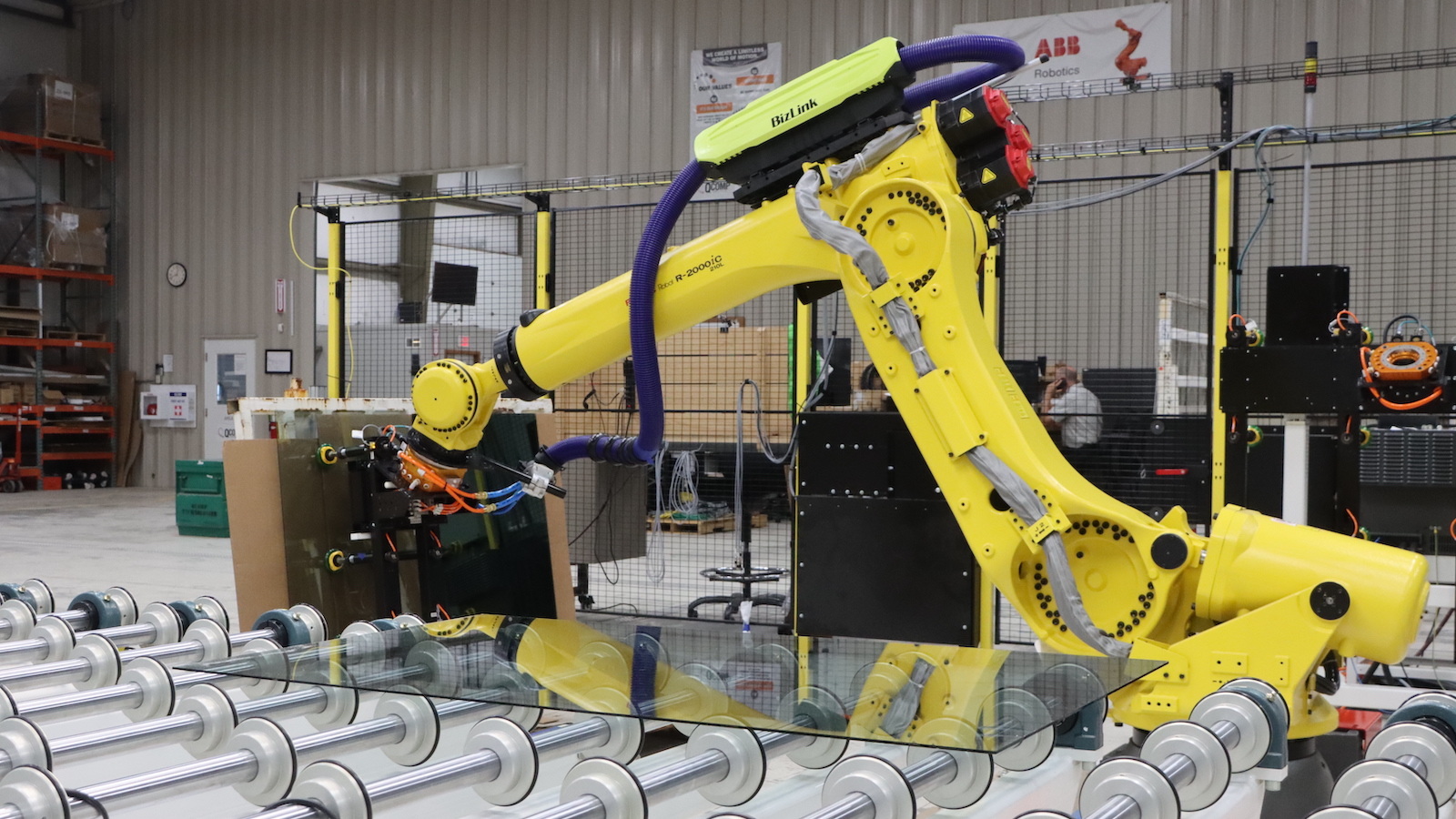
Loading and unloading at cutting tables, washers, and insulating glass lines are all potential starting points. So are stacking and destacking glass onto racks. Each removes repetitive handling from a production process, but the right choice depends on where a plant faces its greatest constraint.
A manufacturer does not need to automate the entire line in one project. Solving one or two specific pain points can create a foundation for the next step.
2. The Toughest Handling Challenges Demand Flexibility
Glass production is rarely one size fits all. A plant may handle a mix of lite sizes and thicknesses, custom orders, coated glass, or products that require particularly careful movement. Older equipment and limited floor space can add another layer of complexity.
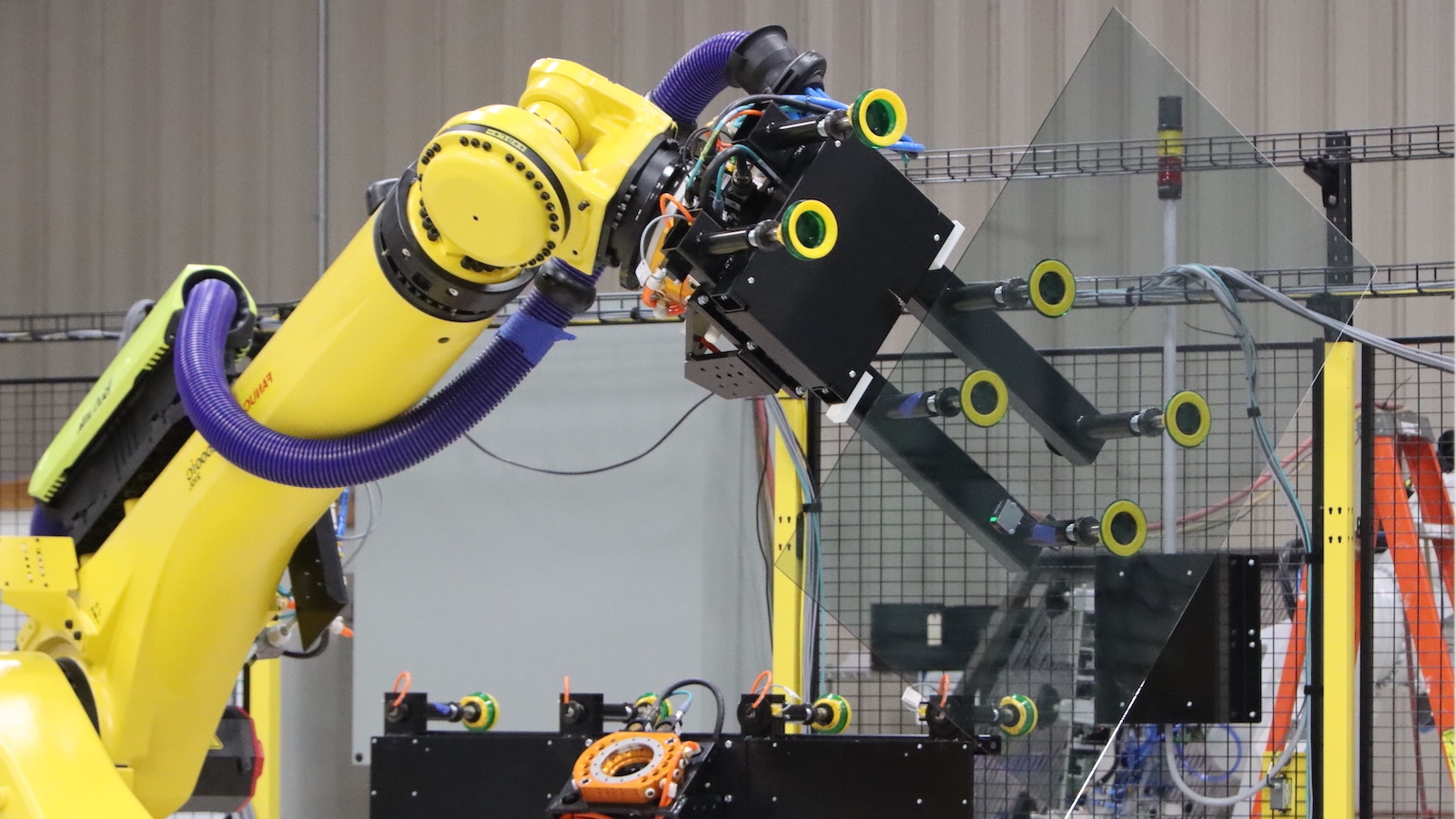
That variation is why a glass handling system requires more than a robot with a vacuum gripper. It must identify where a sheet is positioned, apply the appropriate grip, and respond when conditions differ from expectations. Vision, sensing, tooling, and controls all must work together.
We expect flexibility to remain a priority as manufacturers consider how today’s investment will handle tomorrow’s product mix. Designing only around the easiest or most common product can limit the value of a system as production needs evolve.
3. Automation Has to Work With the Rest of the Line
It is tempting to focus on the station where the problem is most visible. But speeding up one step can create a new bottleneck immediately before or after it.
If an automated system unloads glass faster than it can be staged, racked, or moved to the next process, the line may not gain the capacity the manufacturer expected. Before designing a cell, it is worth looking closely at material flow, available space, and how the system will connect with existing equipment.
These discussions also help answer practical investment questions:
- What will installation require?
- How much production disruption should the plant plan for?
- What changes elsewhere on the line would help the automation deliver its full value?
4. ROI Includes More Than Throughput
Payback is an important question, and manufacturers should ask it. But the value of automation may also include reducing strenuous handling, improving consistency, limiting breakage, and allowing employees to move into work that calls for their skills and judgment.
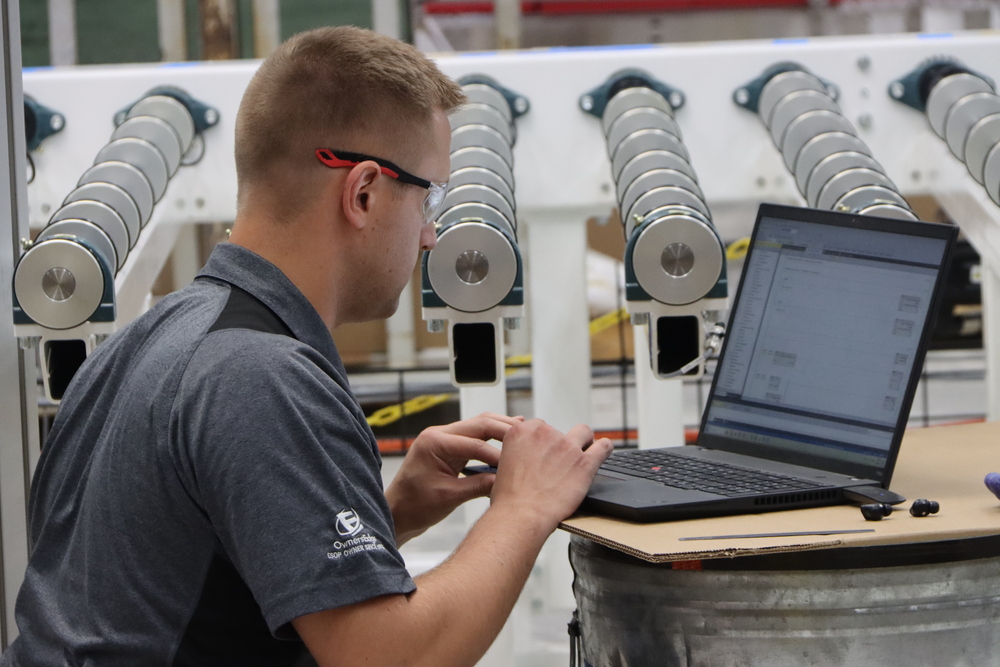
The people who will run the system need to be part of the plan. Operators can identify process exceptions that are easy to miss on paper. Maintenance teams need the training and access to support the equipment. Service after installation matters, too.
A successful project is one that performs in the plant’s real operating conditions—not just during a demonstration.
Looking Ahead: Start Focused, Then Build
We see continued opportunity for robotics, vision-guided handling, and better-connected processes across glass manufacturing. But the most useful advice for a company evaluating automation today may be the simplest: start with a problem worth solving.
That could be a heavy loading task, an injury risk at a rack, or a manual step limiting throughput. Sometimes the best first project is not the most technically complex one. It is the one that makes work safer or gives people more time for the tasks that need a human touch.
At QComp, we help manufacturers evaluate those opportunities in the context of their full operation and build solutions that can grow with them.
To explore glass handling applications and the engineering challenges behind them, read our Guide to Glass Handling Robotics or reach out to us today to learn more.

.png?width=40&height=40&name=image%20(31).png)