

Manufacturing leaders are delaying automation decisions at a critical moment, driven by ongoing uncertainty across the global economy. Geopolitical shifts, volatile markets, supply chain disruption, tariffs, labor constraints, and rising costs have all contributed to a more cautious investment environment.
While that caution is understandable, I believe it is creating a widening gap between manufacturers preparing for what comes next and those who will be forced to catch up. As uncertainty delays decisions, pent-up demand is building, and when conditions stabilize, manufacturers and integrators alike will face significant capacity and lead-time pressures.
From my perspective, the state of manufacturing automation in 2026 is defined by uncertainty. This article explains why waiting is no longer a viable strategy and how manufacturers should rethink automation to stay competitive.
What’s fundamentally different about manufacturing automation in 2026?
Manufacturing automation isn’t just more advanced; it is viewed differently at the leadership level. Automation has shifted from an optional improvement to a strategic requirement shaped by labor realities, market volatility, and lessons learned over the past five years.
Key differences defining automation today include:
- Automation is now a necessity. Skilled labor shortages continue to intensify, making automation essential for maintaining throughput, quality, and consistency
- Post-pandemic demand changed the industry permanently. The COVID-era surge in demand accelerated automation adoption and new technologies at an unprecedented pace
- Experience matters more than ever. While demand created many new automation providers, manufacturers in 2026 are prioritizing experienced system integrators that understand how complex automation performs over time, not just during startup
- The focus has shifted from “more automation” to “the right automation.” Today’s manufacturers need solutions tailored to their products, processes, and constraints, not one-size-fits-all systems
- Speed and flexibility are now core requirements. Delayed capital expenditure decisions create intense schedule pressure once projects are approved, making execution speed critical
Implementing automation during slower production periods is often far less disruptive than waiting until volumes increase and operations are already under strain.
Where is the next wave of high-impact automation?
Most manufacturers begin their automation journey with clear bottlenecks like palletizing or basic material handling. In 2026, however, the highest-impact opportunities are emerging deeper within the value stream, where automation eliminates non-value-added work, reduces handoffs, and consolidates operations.
Indicators that a process is ready for automation include:
- Repetitive tasks that create fatigue, inconsistency, or throughput constraints
- Dangerous or dirty operations that increase safety risk and turnover
- Non-value-added handling, such as moving parts between processes without transforming them
Manufacturers are more disciplined about distinguishing value-added operations from everything else. While skilled operators remain essential for tasks requiring precision, judgment, and “touch and feel,” automation is increasingly used to remove the mundane work surrounding those operations.
High-impact opportunities include:
- Non-value-added steps throughout a part’s lifecycle. Every unnecessary transfer, staging step, or repositioning event is an automation opportunity
- Combining multiple operations into a single robotic cell. New robotic technologies perform multiple tasks without setting a part down, reducing handling, errors, and total operations
- Reducing total process steps. Compressing a process from ten operations to six can drive significant gains
- Supporting growing data and traceability requirements. Automation serves as the backbone for production data collection, quality tracking, and compliance
In this context, longer cycle times are no longer taboo if they eliminate entire operations and improve overall system performance, quality, and throughput.
How should manufacturers think about flexibility in automation investments?
Flexibility is critical in 2026, but it is also one of the most common sources of overengineering. Some manufacturers assume automation must handle every possible product, format, and scenario. From my experience, excessive flexibility often increases cost, complexity, and risk without delivering proportional value.
A more effective approach to flexible automation in 2026 includes:
- Automate where it delivers maximum return. Many operations see that the majority of their throughput comes from a small number of SKUs. Automating those areas captures most of the value without overengineering the system
- Avoid automation where humans outperform machines. Just because a task can be automated does not mean it should be. Certain complex, judgment-based, or low-volume tasks are often better handled manually
- Prioritize simplicity. Overly flexible systems are more costly, harder to implement, harder to maintain, and more prone to downtime
- Include operators and maintenance teams. Automation adoption improves dramatically when frontline teams are involved from the beginning. They often know best where automation will deliver the most impact and can speak to improvements over time
The most successful automation strategies focus on doing the right things exceptionally well rather than trying to do everything.
Looking ahead three to five years, which capabilities will manufacturers wish they had started building today?
Automation is inseparable from long-term competitiveness, and waiting to begin the journey is no longer a viable strategy.
Future-ready manufacturers are building:
- A scalable automation foundation. Early investments make it easier to expand, standardize, and adapt systems as demand and technology evolve
- Workforce readiness for advanced technology. Automation still needs people who can ideate, implement, operate, and maintain increasingly sophisticated systems
- A strategy to develop skilled labor internally. Manufacturers will have to grow their own talent, which requires time, training, and sustained investment
- Operational confidence in supporting complex systems. Advanced automation can predict failures and optimize performance, but only if organizations can sustain it
- Advanced sensing and intelligent systems. The integration of AI-driven tools will accelerate automation performance, predictive maintenance, and quality control
I think it’s important to note that delaying automation rarely reduces cost. Inflation, labor, and equipment pricing have consistently made the same systems more expensive year over year. Manufacturers that will lead in three to five years are not waiting for elusive certainty.
What role will AI play in manufacturing automation?
In 2026, the conversation around AI in manufacturing has shifted from experimentation to practical application. I agree that AI is an important part of modern manufacturing automation, but it is not a replacement for engineering judgment or real-world experience.
Today, AI is enhancing automation in practical, high-impact ways:
- Vision and perception systems. AI-powered cameras, sensors, and vision systems allow robots to identify, locate, and handle parts that vary in shape, orientation, or consistency
- Improved adaptability and quality. AI enables systems to recognize what is happening on the line in real time, helping automation respond to variation that would have previously required manual intervention
- Operational support and troubleshooting. AI tools can assist with diagnostics, accessing technical documentation, identifying potential part failures, and supporting service and maintenance workflows
At the same time, AI has clear limitations. It does not bring decades of integration experience, nor does it inherently understand what will or will not work in a real manufacturing environment. Automation success still depends on lessons learned from years of implementation and refinement. Experienced engineers and operators must apply judgment to determine when AI-driven solutions make sense.
How should manufacturers evaluate robotic integrators in 2026?
Automation is no longer something manufacturers adopt after growth. It is how they prepare for it. Those who wait risk higher costs, longer lead times, and far more disruption.
What ultimately separates successful automation from costly mistakes is experience. At QComp, we have been designing and implementing automation for more than 30 years. We know what works, and just as importantly, we know what doesn’t. Meanwhile, many newer integrators are still learning those lessons in the field and repeating mistakes a more experienced integrator has long figured out.
We serve a range of industries, from glass and consumer goods to food and beverage and nonwoven products. If you’re ready to start or advance your automation journey, contact QComp to have a practical conversation about what makes sense for your operation today and where you want to go next.

Share this
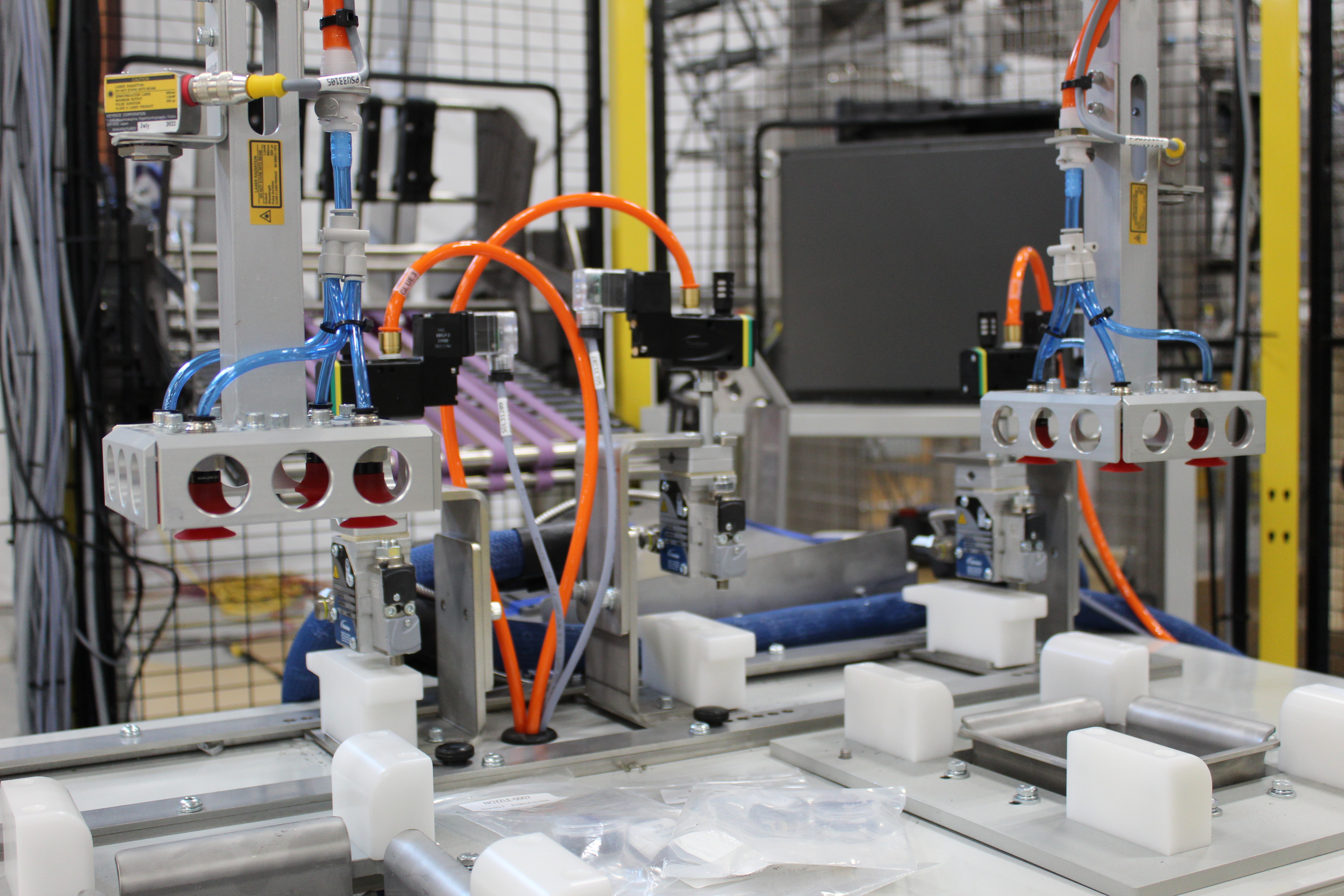
Automation Isn’t the Risk. Standing Still Is. 10 Questions Manufacturing Leaders Are Asking
Explore 10 common manufacturing concerns about automation and why delaying robotics may be the greater operational and competitive risk.
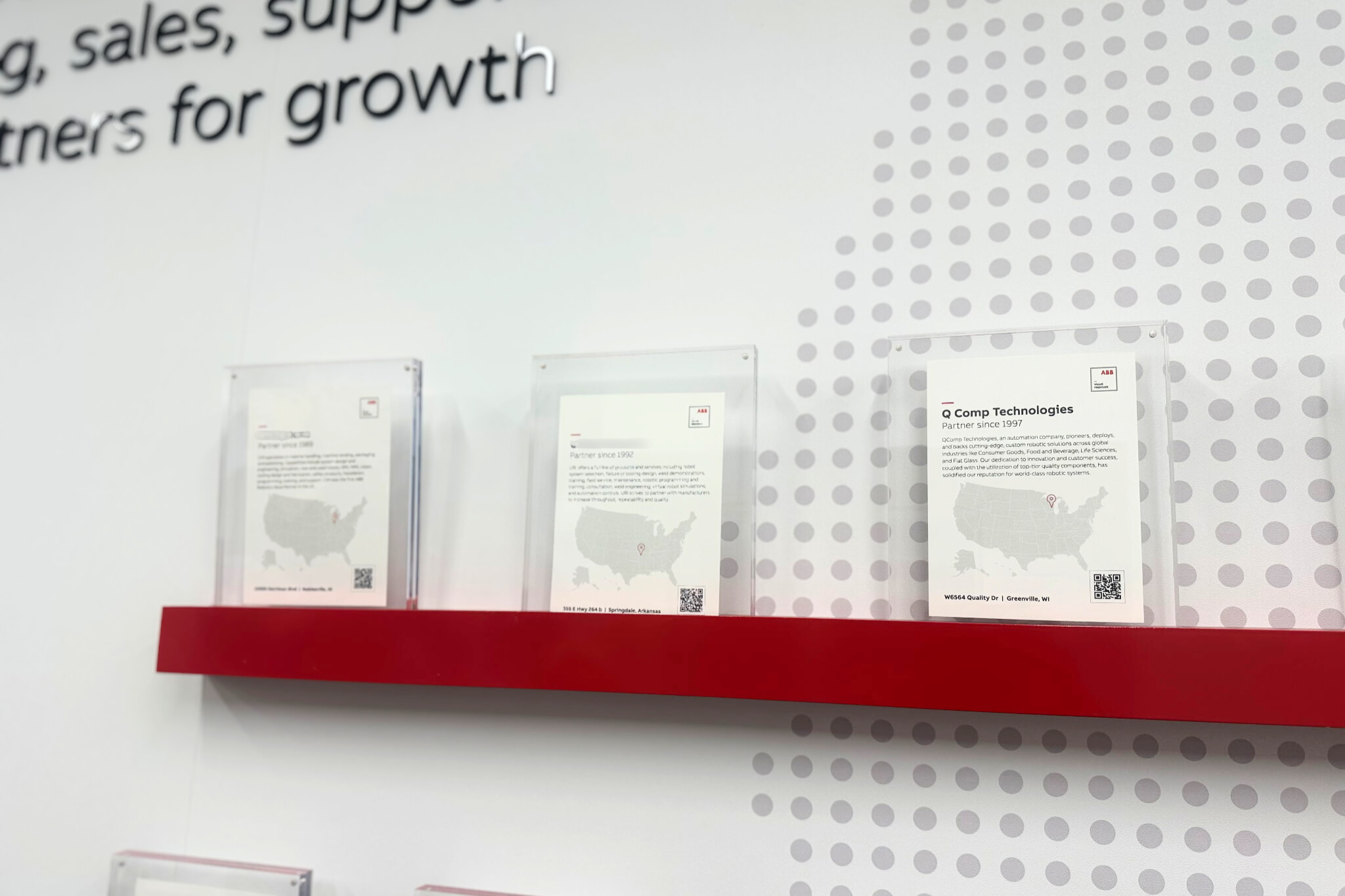
QComp: Proud to Be One of the First ABB Value Providers in the World
QComp was the third company in the world to join ABB’s Value Provider Program. Discover how decades of partnership and proven expertise help us deliver smarter, certified automation solutions that conquer complexity.
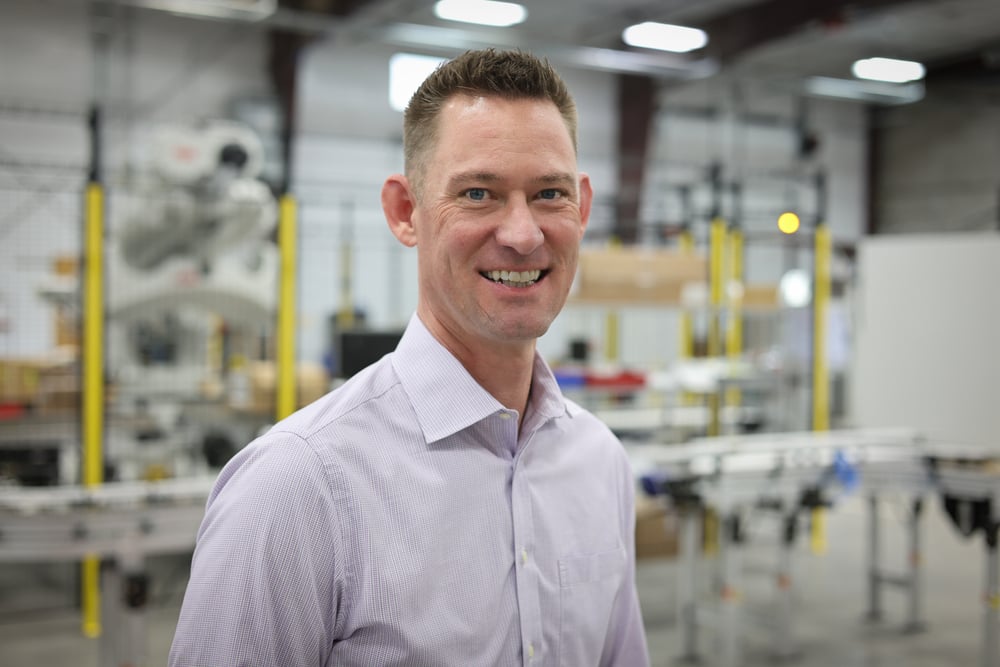
Blake Consdorf Named President of QComp Technologies
QComp Technologies appoints automation industry veteran Blake Consdorf as president, reinforcing its commitment to engineering-led growth, employee ownership, and long-term customer value.